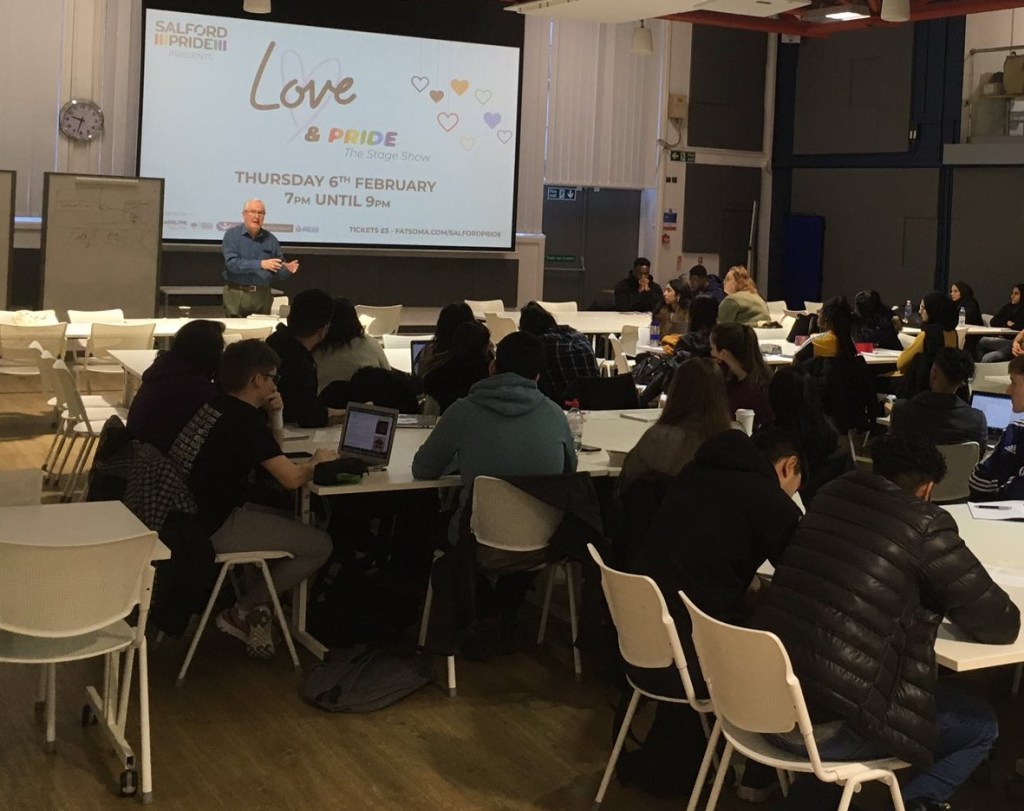
Conor Wilkinson

Conor is currently an applications scientist a Lubrizol and works in performance coatings, using dispersals in paints which improve the colour strength, gloss and reduce the haze of the product. In particular he tests new hyper-dispersal technology and generates promotional data packages to present to customers at events such as trade fairs. During his talk he also spoke more broadly on the topics of product development, project management and sustainability.

In regards to product development there are both a technical and business case for the project, marrying both the technical and commercial factors. The technical case is the performance, application and regulation of the product and business case is the market research, value of the product and market competition. Project management sees the idea from initial generation through multiple screens, product ideas, the business case, product development and scale up prior to launch.

Sustainability is a large factor in the polymer industry with most origins of plastics originating in the petrochemical industry and not biodegradable products. Current food pouches contain as many as 8 polymer layers and are not recyclable, trends in sustainability are to use a polyethylene coat onto a paper surface as seen in the current ‘Eco-friendly’ cups. These are compostable in industry, however are not biodegradable so companies such as Lubrizol attempting to develop biodegradable and bio-based polymers to solve this and other sustainability issues facing the industry.
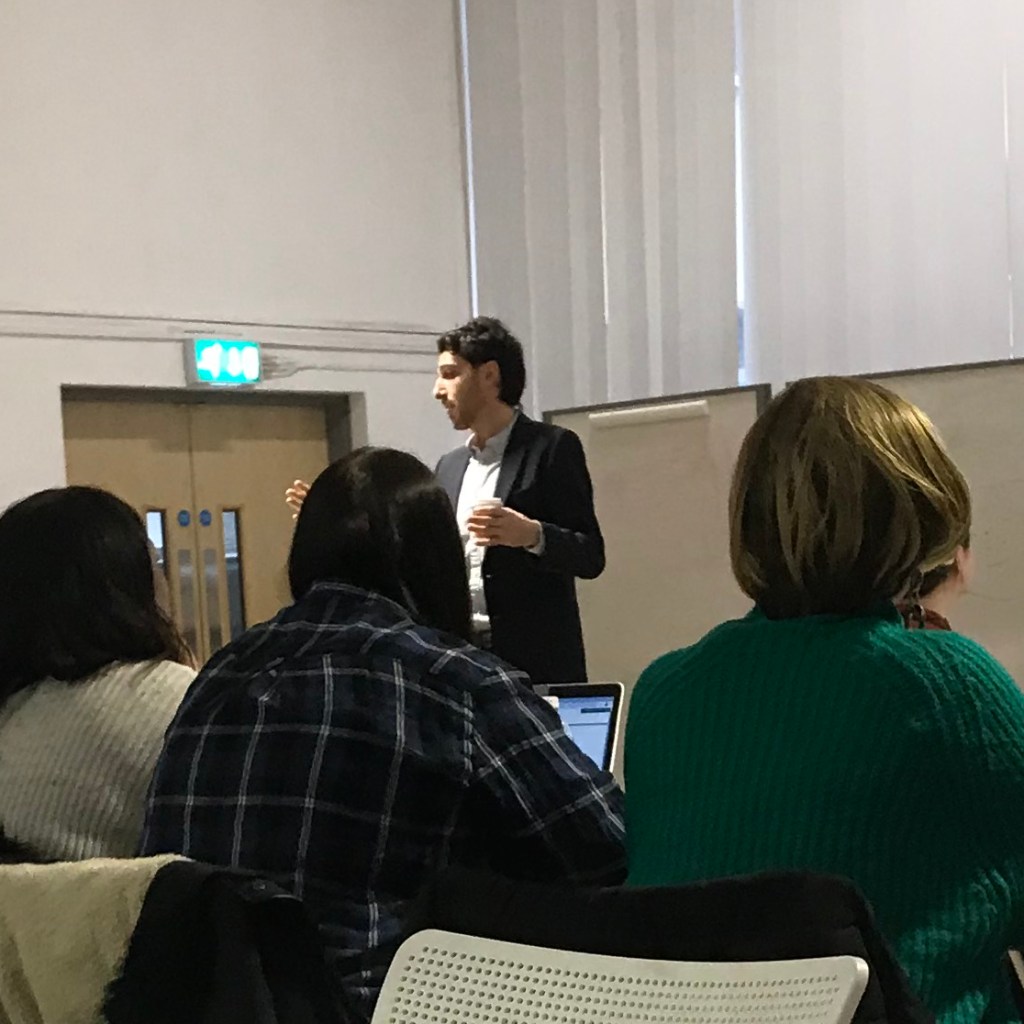
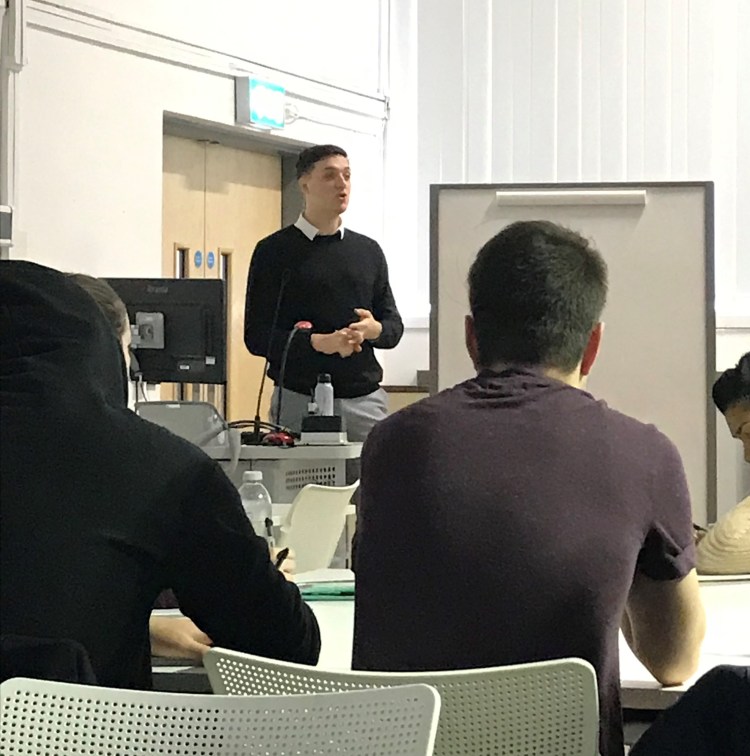
Alex Adler

Alex’s talk focused on the ethics of a workplace and ethic within business. At the present time Alex works in the private sector as an investment analyst at arrow global group having previously working in the public sector as an assistant economist as HM Treasury, undergoing a master’s degree in economics at the University of Amsterdam in between these two roles.

How do we measure ethics? Is it measured by carbon footprint, the treatment of employees by companies? Currently times are moving in which the current generation put a larger emphasis on environmental factors and sustainability so the idea of ethics is evolving alongside the general morals of the nation and world.

Alex spoke on ethical investments such as in weaponry and proposed the question, if this money was invested into schools, hospitals and other infrastructure is this investment still unethical or does it become ethical due to this? A example of conflict of interests we discussed as Wonga has investment from the church of England and Wonga are a company that target customer who they know can not afford to pay back the loan as to generate the greatest profit from each customer.

Famous cases of ethical issues are with tax avoidance as seen in many cases from Jimmy Carr and his offshore tax haven, other high profile people such as Sir Ian Botham and Sir Alex Ferguson has also been convicted for tax avoidance. Tax avoidance is not illegal but is immoral, tax evasion however is illegal.

Alex mentioned the nudge unit which is a behavioral economics unit which try to influence the decision making of the public subconsciously. Is it okay to be influenced by big corporation about these issues such as sustainability and environmental changes? Is it going to be beneficial to the world and population as a whole or is it going to be agenda which is in the companies best interests?

Luke Williams

Luke is currently a business development executive moving from a recruitment specialist at Intertek, having worked as a scientific recruitment officer at VRS recruitment after graduating from university. This topic of recruitment was the main theme of Luke’s presentation speaking on; applying for jobs, what a perfect CV entails and interview preparation.

The main points raised about recruitment were, to not have a generic CV and tailor it for the specific role as it makes them know you have taken the time and made the effort to apply for that specific job. Making a CV concise and easy to read is also important. Another key point was about interviews, researching about the company as ‘failure to prepare is preparation to fail’. A further piece of advice for an interview is to have questions for the interviewer as this is your chance to assess the company and you have as much right to deny the company as they do to deny you the role.

Luke also spoke about Intertek outlining the company’s structure and stating, ‘it is the largest business that no one knows’. Intertek have many different branches within the company as they have a crude oil testing facility, product testing for electrical conducting safety testing, food quality safety and quality testing as well as the main pharma segment of the business. The sustainability of a business is vital, Luke spoke on how Intertek pulled out of a deal purchasing a business due to the poor long term sustainability of the company in question. Intertek can certify the sustainability of both operational and corporate sustainability assessing; risk management, compliance, environmental factors, communities, finances, quality assurance and safety as a few of the evaluated standards.

Anne-Maire Swift

Anne-Maire is the owner of a business consultancy as well as being a mentor, speaker, trainer and coach within the business industry. Anne-Maire is from a scientific background working in the pharmaceutical industry at Pfizer and spoke about the parallels between the characteristic of a business and a scientific mindset. Though workshop activities we spoke about many different business people from the eccentrics like Elon Musk and Richard Branson to Emma Walmsley and Warren Buffet who are seen much less in the press. Some of the attributes these individuals have are critical thinking, data management, self-dedication and not being scared of failure which are also observed in the science industry.

Developing a business mindset is another focus of the talk in which Anne-Maire gave 10 points on doing so:

  1. Be aware with the news and the business world around you.
  2. Find out what the people want, conducting market research and a focus on convenience and speed which everyone wants to make their lives easier.
  3. Accept the purpose is to make money.
  4. Thinking for yourself and not others.
  5. Forward planning and being strategic about your activity and progression.
  6. Connect with profitability and the language associated with business.
  7. Understand and implement a strategy.
  8. Consider multiple streams of income, don’t be closed to ideas.
  9. Its not about you and the business come first.
  10. Ultimately a need to translate everything to business.

Ultimately describing a business mindset as ‘a way of thinking that enables you to uncover and see problems as opportunities and then turn those opportunities into a business and an understanding that everything comes from and idea and execute it.’

Roy Cavanagh MBE

Roy’s story is a real rag to riches tail from living in the old Salford docks to MBE. Roy left school at 15 after what he described as a bog-standard education having spent his time enjoying football and cricket in his youth. His deep passion for Manchester United is shown in his writing as 6 of his 20 books are about his beloved club. Roy’s writing initially started a side hobby on a Manchester United football forum while working in the ‘monotonous’ payroll department.

He strongly believes in personal management and spoke about how he would communicate with the highly skilled members of the team in his next job at Seddon construction, getting an insight into the issues they were facing and help to resolve these issues finding it beneficial to manage the worker rather than take a site management approach.

The importance of youth is another topic Roy spoke on as he was aware of the huge number of full-time students in construction and the lack of apprenticeship opportunities for these individuals. Roy is the lead for apprenticeship and training for ages 14-19 in the UK for construction with current his employers Seddon employing 50 apprentices annually. The “four A’s” Roy implements into recruitment assessment are; attendance, attitude, ability and ambition in that specific order finding these attributes from an employer’s perspective beneficial to the company. This investment in youth is also seen in the science industry by the Scottish government stating a comprehensive standard for careers guidance should be formed from employers, local authorities and skills development Scotland in their developing the young workforce annual report.

In 2008 Roy received an MBE for his services to the construction industry described how he applied hard word, determination and resilience to drive and achieve in life.

Design a site like this with WordPress.com
Get started