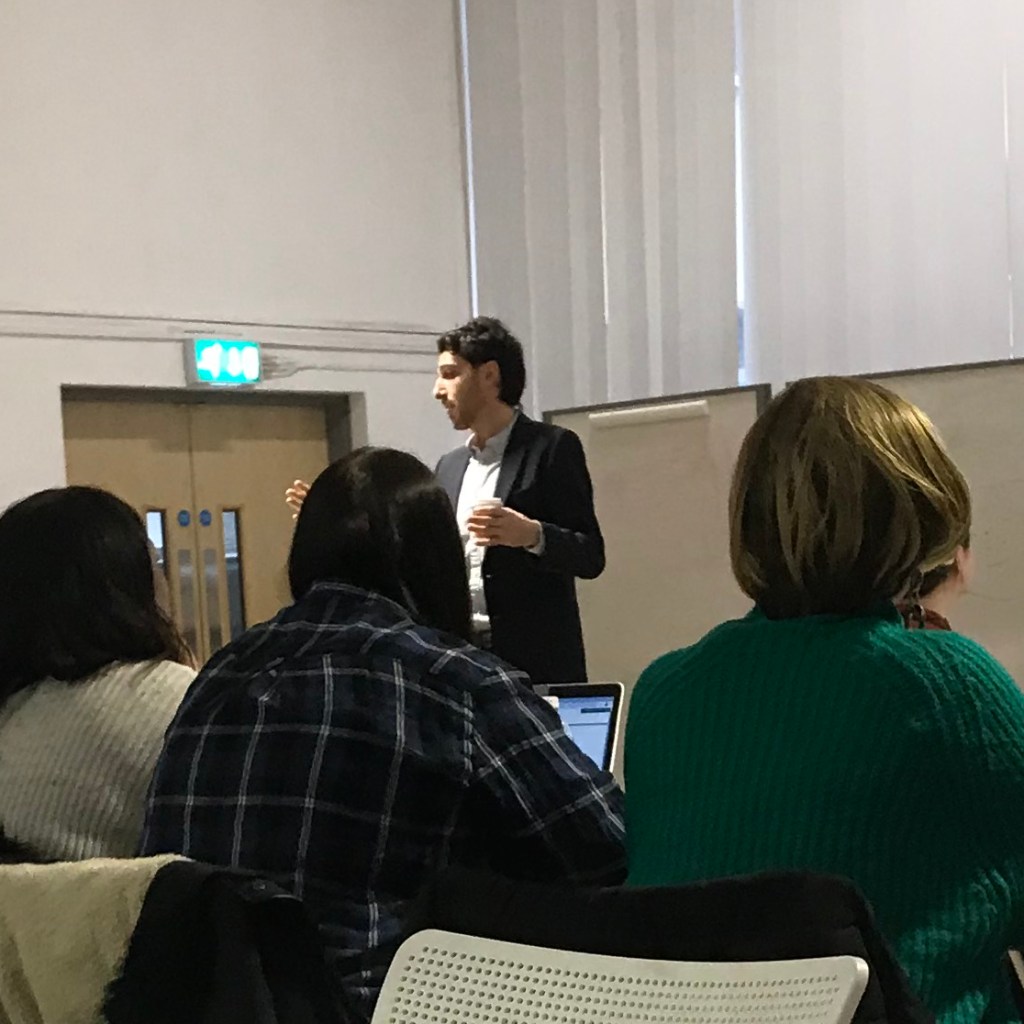
Alex’s talk focused on the ethics of a workplace and ethic within business. At the present time Alex works in the private sector as an investment analyst at arrow global group having previously working in the public sector as an assistant economist as HM Treasury, undergoing a master’s degree in economics at the University of Amsterdam in between these two roles.
How do we measure ethics? Is it measured by carbon footprint, the treatment of employees by companies? Currently times are moving in which the current generation put a larger emphasis on environmental factors and sustainability so the idea of ethics is evolving alongside the general morals of the nation and world.
Alex spoke on ethical investments such as in weaponry and proposed the question, if this money was invested into schools, hospitals and other infrastructure is this investment still unethical or does it become ethical due to this? A example of conflict of interests we discussed as Wonga has investment from the church of England and Wonga are a company that target customer who they know can not afford to pay back the loan as to generate the greatest profit from each customer.
Famous cases of ethical issues are with tax avoidance as seen in many cases from Jimmy Carr and his offshore tax haven, other high profile people such as Sir Ian Botham and Sir Alex Ferguson has also been convicted for tax avoidance. Tax avoidance is not illegal but is immoral, tax evasion however is illegal.
Alex mentioned the nudge unit which is a behavioral economics unit which try to influence the decision making of the public subconsciously. Is it okay to be influenced by big corporation about these issues such as sustainability and environmental changes? Is it going to be beneficial to the world and population as a whole or is it going to be agenda which is in the companies best interests?
 Science and Industry External Speakers Blog